
Dash Martin's website:
Momma can be reached at leigh @ leighandjeff.com
Daddy can be reached at jeff @ leighandjeff.com
Both Mom and Dad can be reached at dash @ leighandjeff.com
(note: there are no spaces in the addresses (I left them out to throw off the spam generators))
Note: most of the photos are linked to bigger photos. If your cursor changes (generally to a little hand) when it passes over a picture, click it.
Dash videos online: http://www.youtube.com/DashPotato

Aug 2026: I'm in the midst of porting this from HTML to joomla - it's currently a mess.
New stuff is being added all over the place. I'll try to document anything that winds up somewhere other than below in the What's New page
Leigh is doing a Three-Day Walk for Breast Cancer. See her webpage at: http://www.the3day.org/goto/LeighMartin
| Headshave for Leigh's Charity | 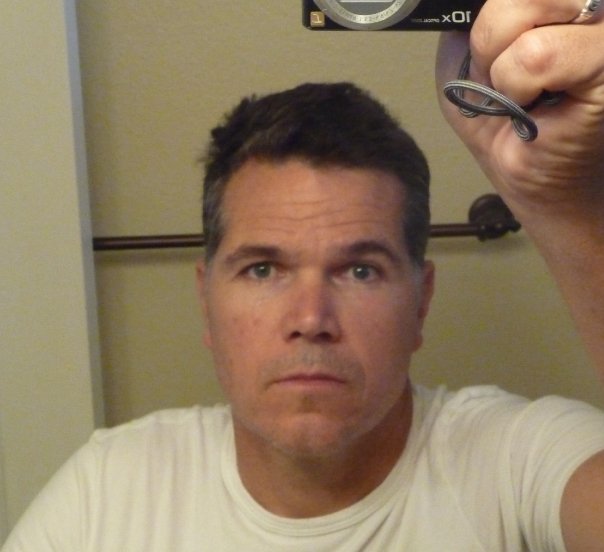 |
 |
Sunday, August 24, 2009
|
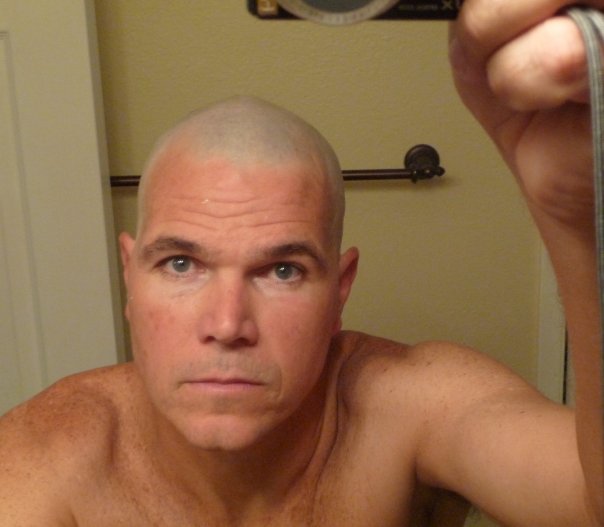
Leigh's walking in the Breast Cancer 3-Day Walk this fall. Both our mom are Survivors. Her fundraising level is now at $710. Based on a conversation last night, I've agreed to SHAVE MY HEAD BALD (and post pictures at our websites and on Facebook) if she gets to $1150 by Tuesday night (I've 3days of presentations next week, I'll need some hair back by then). Don't donate anything that you'll miss if we don't get the $$$ in time. Donate at http://www.the3day.org/goto/LeighMartin
|
| Leigh's Home Page
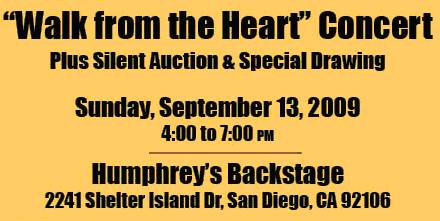
"Walk from the Heart" Concert benefiting Leigh's fundraising for the 3-day Susan G. Komen for the Cure and the National Philanthropic Trust Breast Cancer Fund |
 |
Monday, August 11, 2009
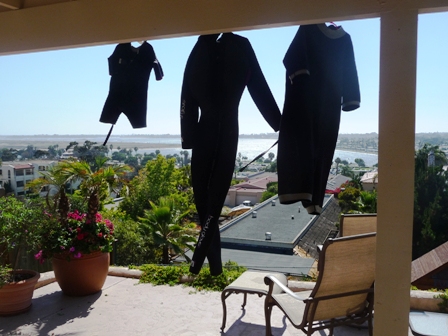
| Wetsuits drying in the wind: Summer in California.
Summer??!!!? |
 |
Take Me to the River! (Jul 30 - Aug 2)
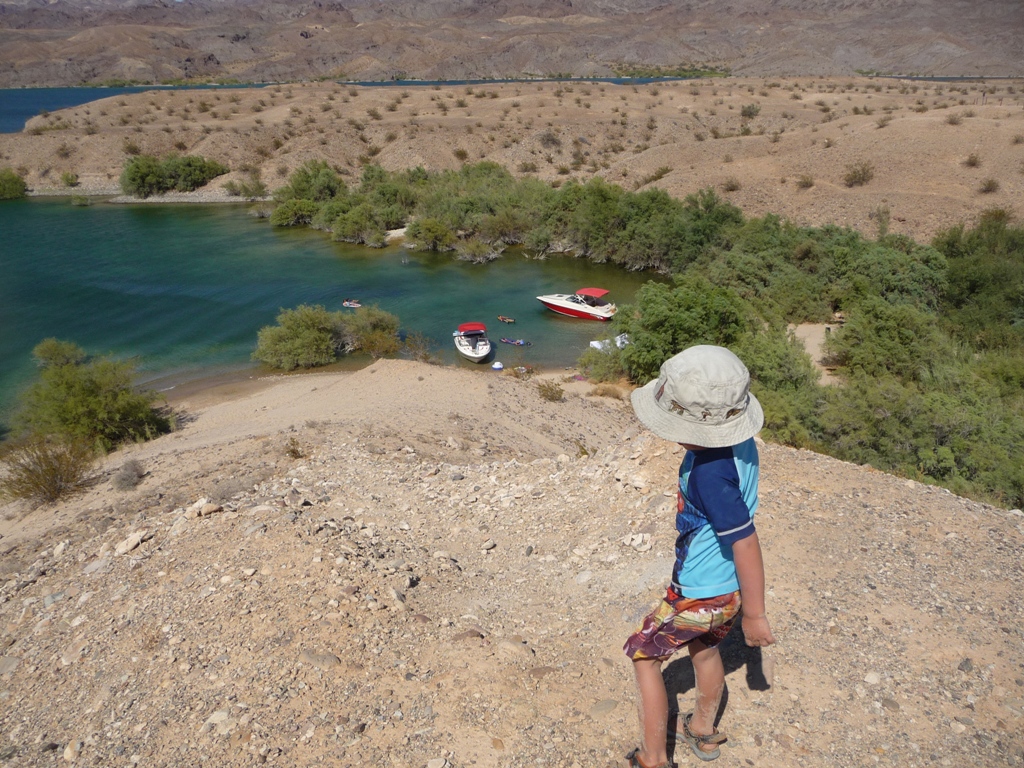
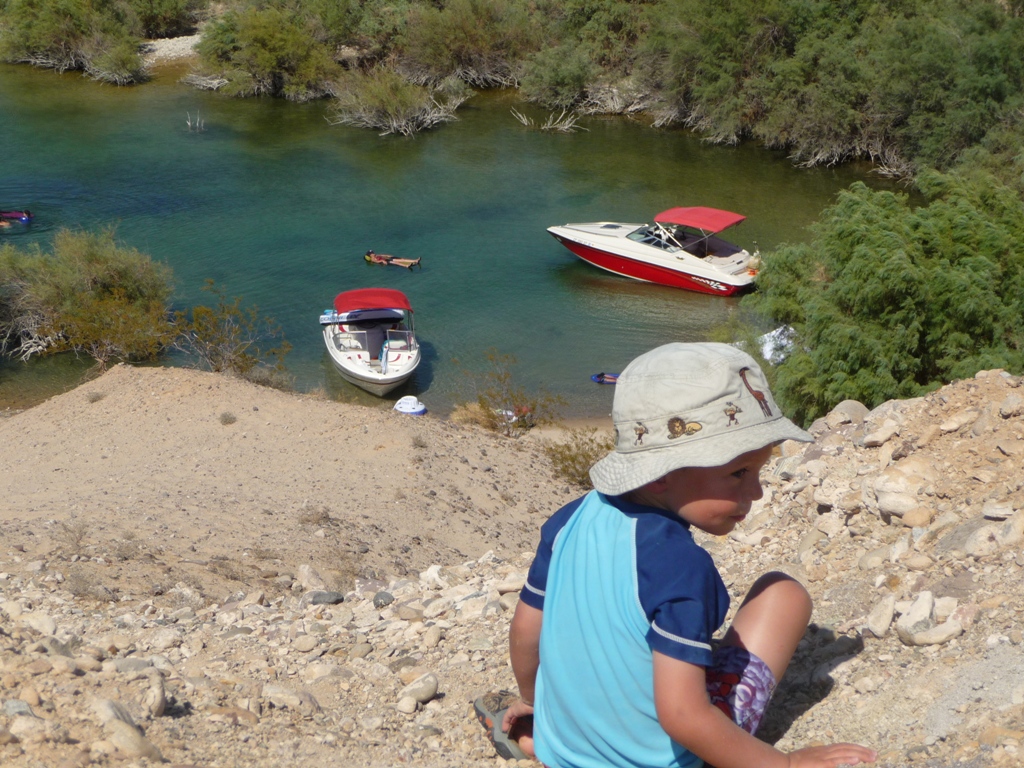
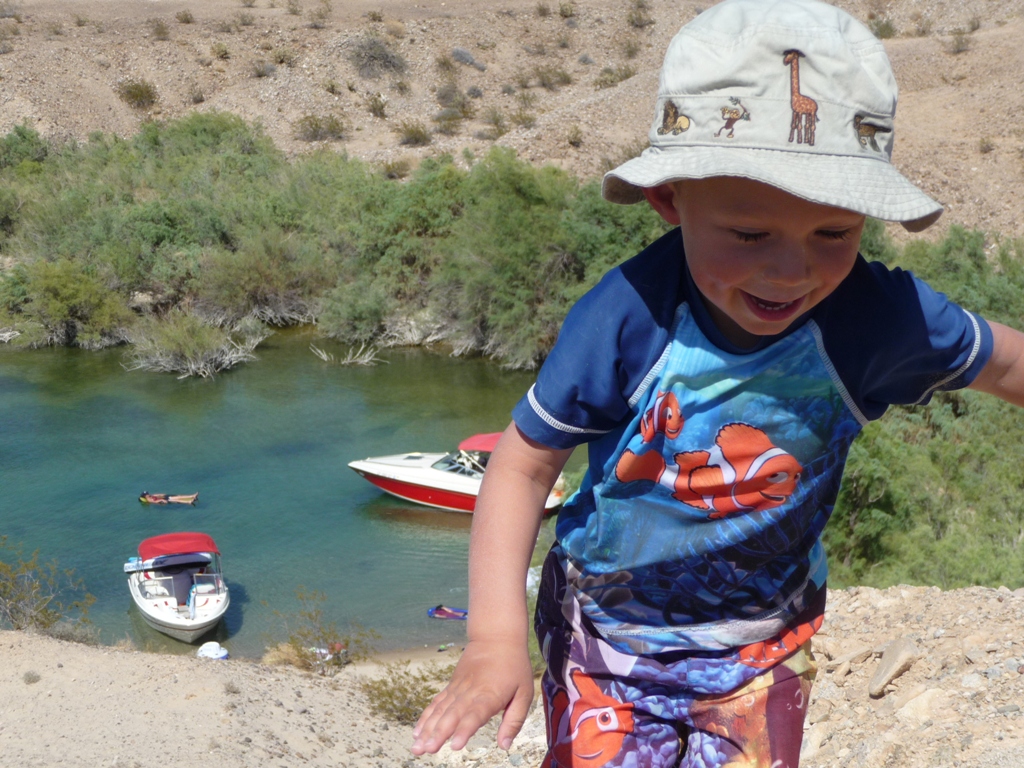
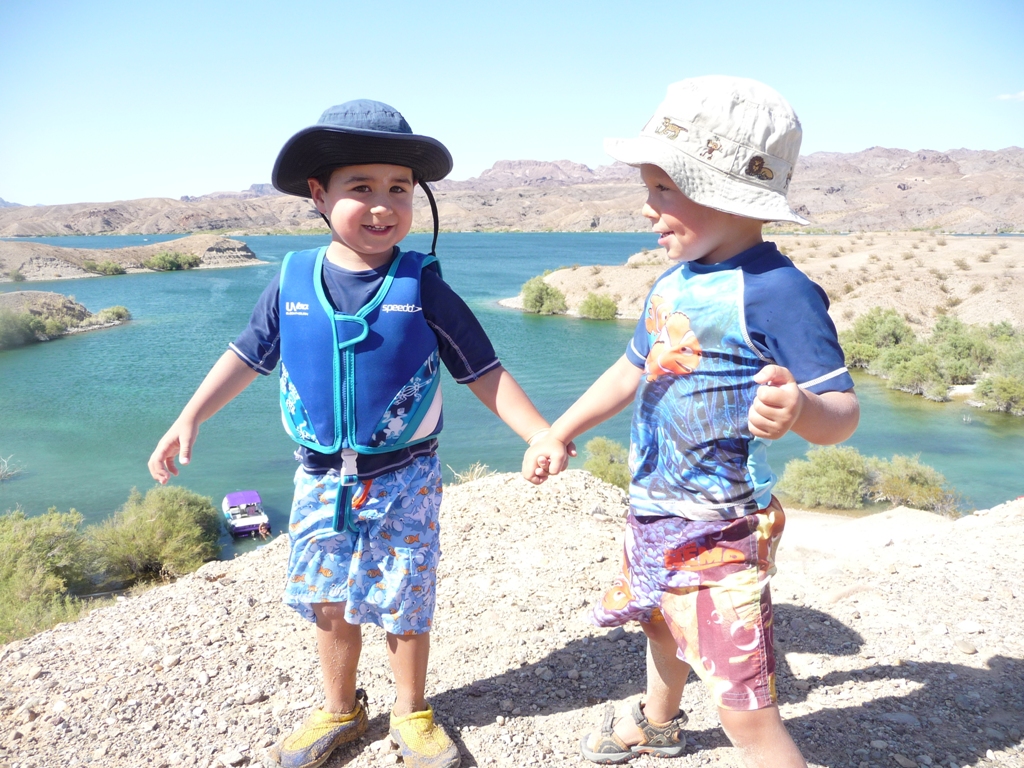
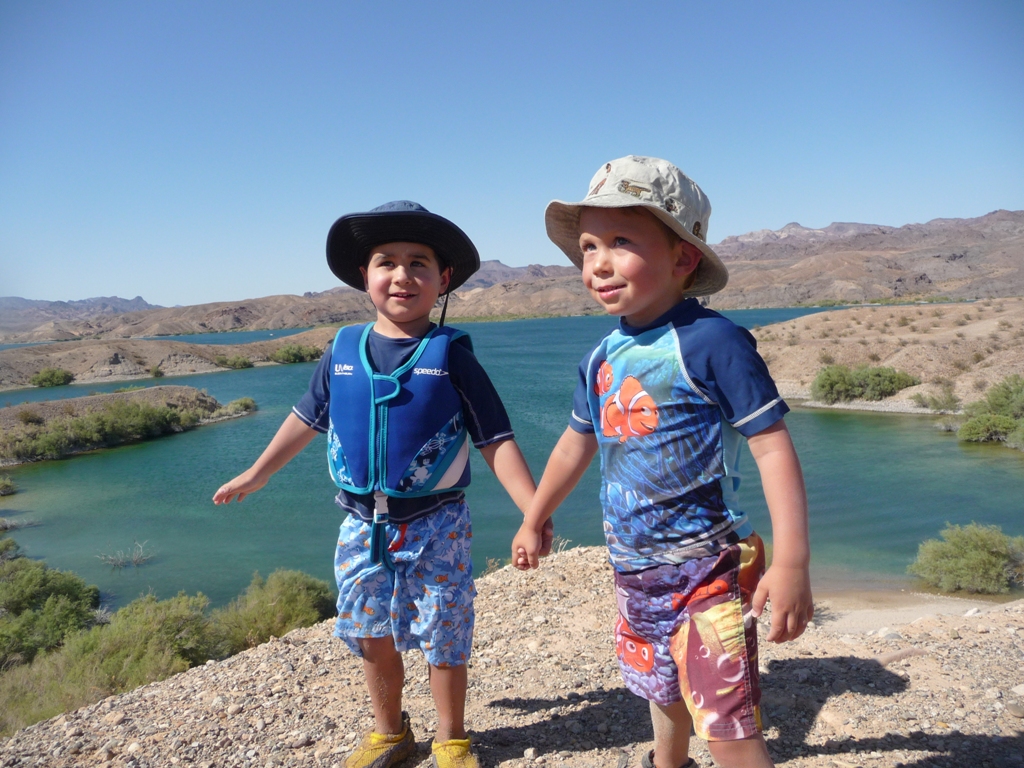
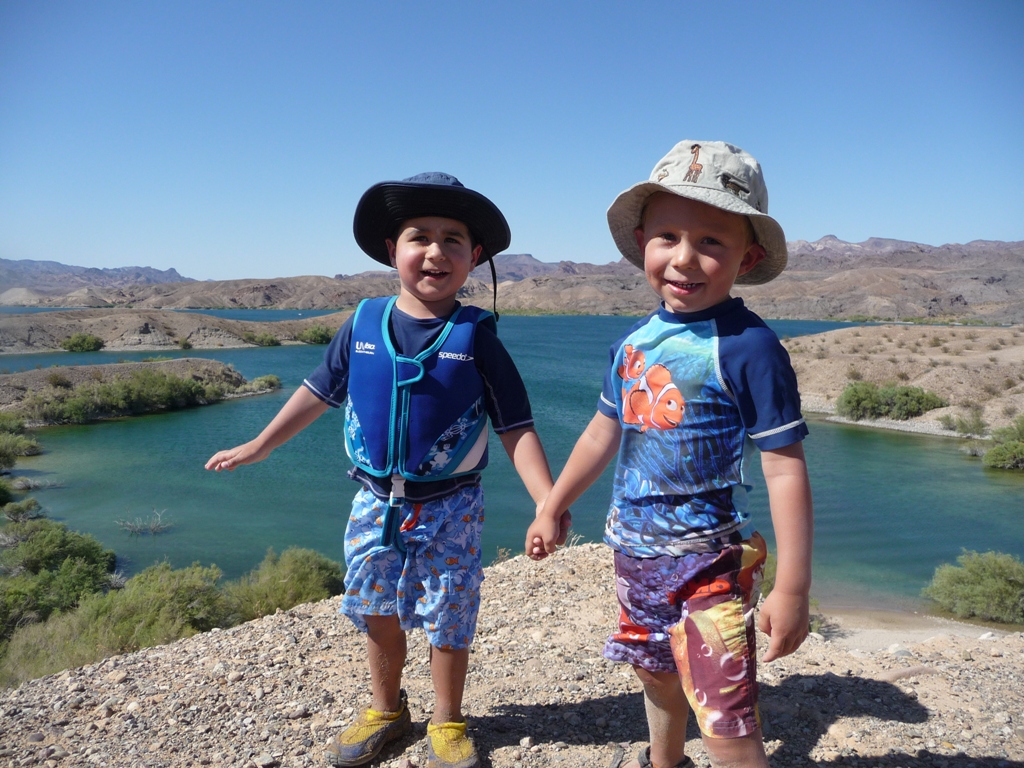
| Our first road trip with the boat. We went to Lake Mojave which is a bit south of Hoover Dam. Seven hours away. We went with Alex and Marissa and Bob in two vehicles. Me, Bob, and Bob's two dogs in the towing pickup truck. Leigh, Marissa, Alex and Dash in their minivan. Apparently, two boys in a minivan for seven hours is not the most peaceful thing...
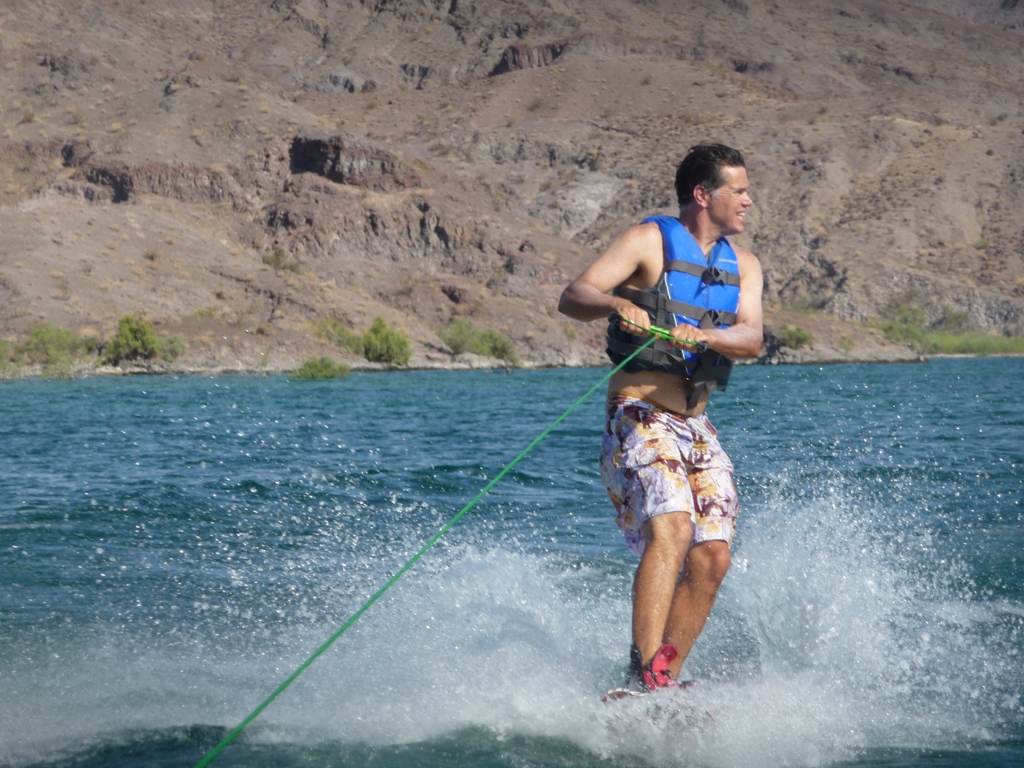
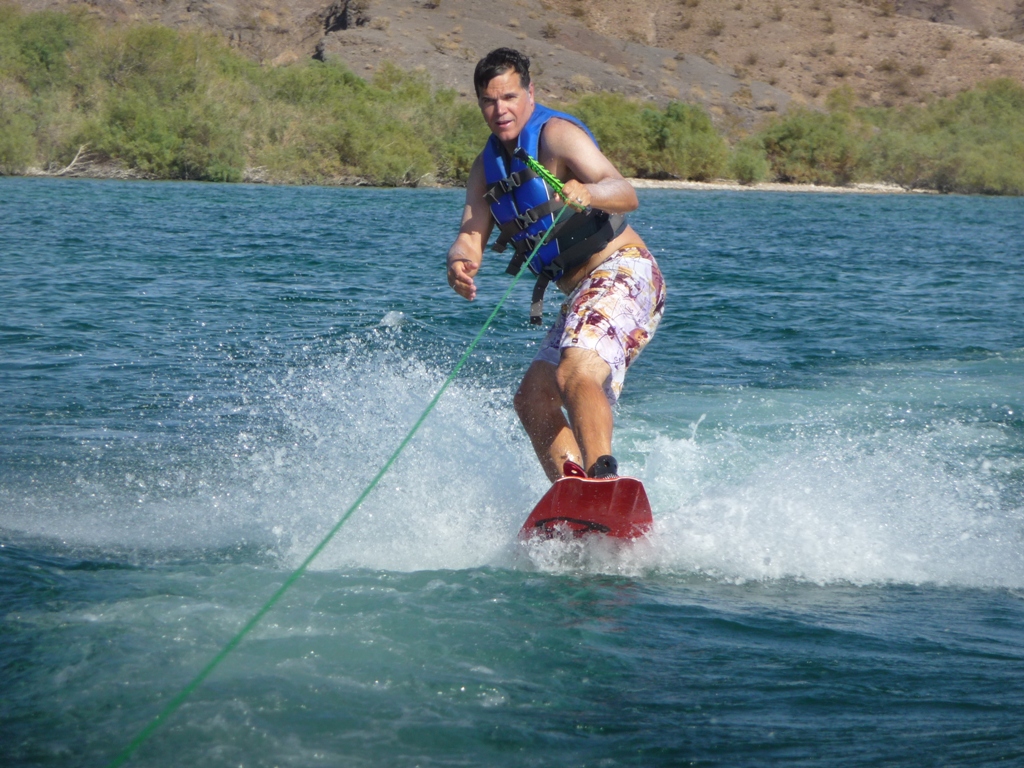
We joined Marissa's sister and brother and their families. Miguel brought his boat and jetski. After launching from Willow Beach we sped twenty minutes to the south and set up camp in a little cove with a sand beach. Odd thing going 35mph on the water and hitting a blast of air that must be 120 degrees. If we need a quick river fix in the future, we'll just get out the blow dryer. We brought a half ton of gear (really) and set up camp for the day. Tubing and wakeboarding (first time in twelve years for Leigh and Jeff). Dash got his first jetski ride, I was impressed that he wasn't the least bit scared going 40mph that close to the water. We stayed at a hotel with a casino close to the Hoover Dam. Now it had been two months since I ate off the Jenny Craig menu and was prepared to pass up the casino's cheap all you can eat buffet. But it was all you can eat King Crab. Crab orgy! Did the dam tour Sunday morning before driving home all day. Lots of fun, too long a drive, though. Picture below are linked to bigger pictures. |
 |
 |
 |
 |
 |
 |
 |
 |
 |
 |
 |
 |
 |
 |
 |
 |
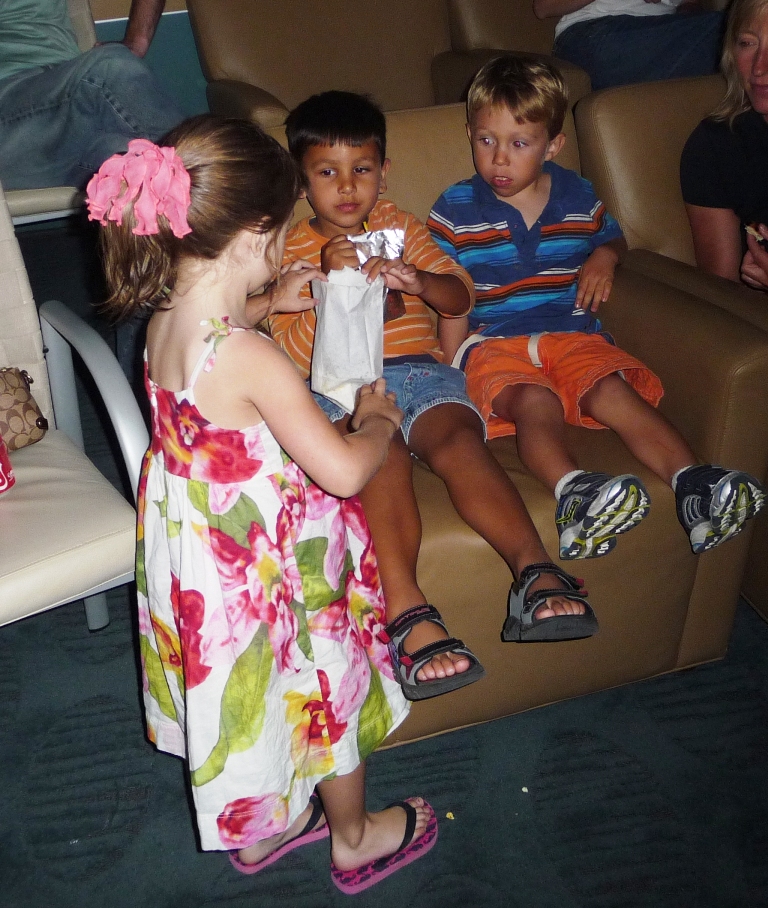
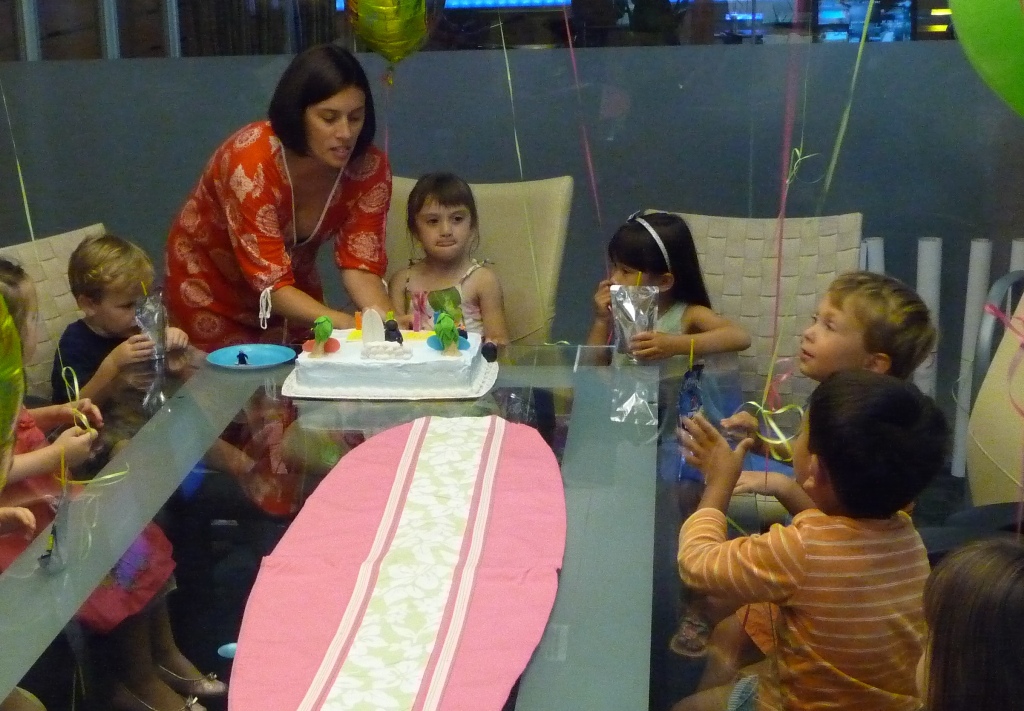
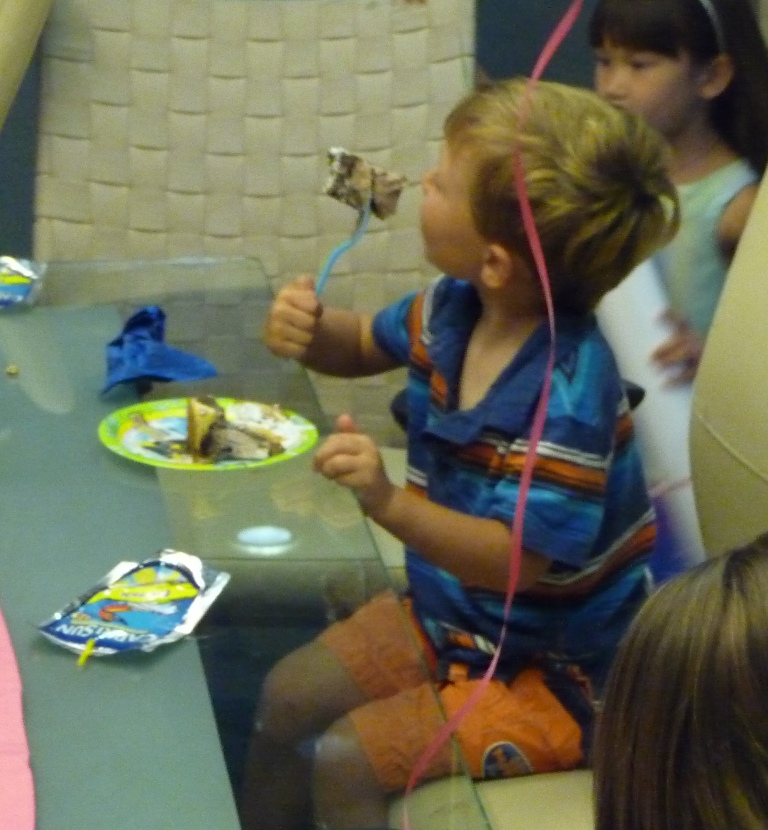
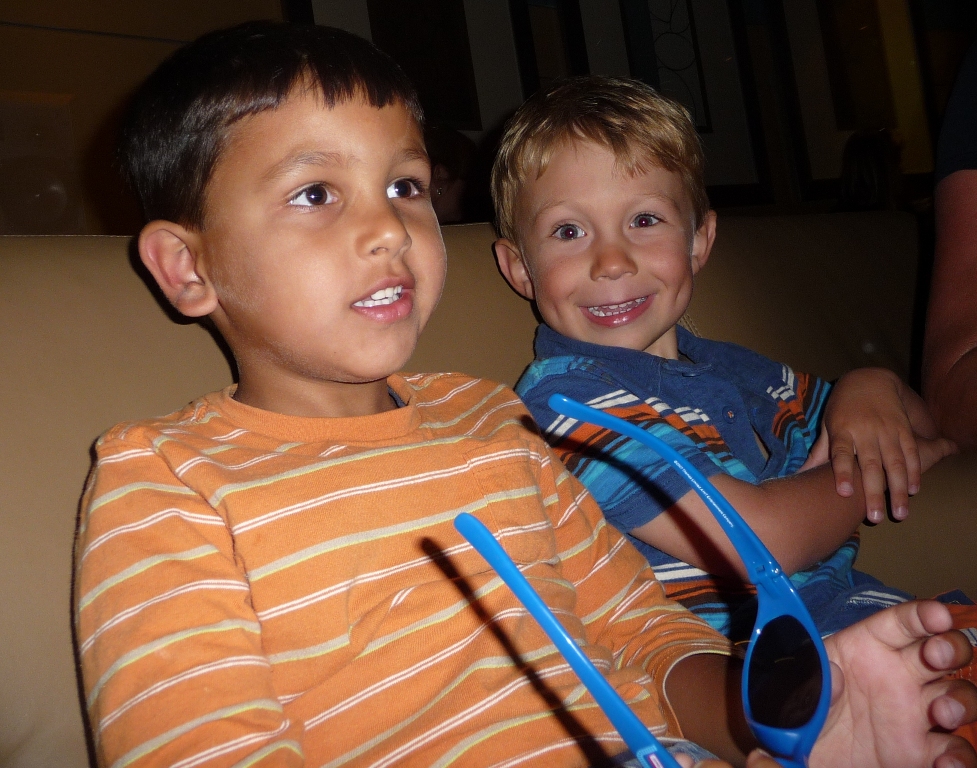
Sienna's 4th Birthday Party (July 25)
 |
 |
 |
 |
 |
 |
Finally Posted: May Trip to Orlando
The beginning of the summer Trip East. Last year we did North Carolina, this year back to Florida. Funny thing, even though it rained pretty much every day we drove an hour to the beach for seven of the ten days. Ironically, upon returning, we went a whole month at home in San Diego without driving the four miles to the beach, because it was too cold.
Jeff Spies and family, including a fresh new baby, joined us for the weekend.
The Spies - Theresa, Chris, Taylor, Emily and Blinkley (the dog) - were kind enough to drive for ten hours south to visit us over a long weekend. First day we spent at Pat Spies pool with them and Danny, Corrine, Zachary and Zoe.
 |
 |
Later we bowled.
| Who do we have here: Theresa, Emily, Corrine, Zoe, Danny and Zachary | Corrine and Theresa with the young smoothie Zachary | Zoe and Dash and the Amazing Ball Return Device! |
 |
 |
 |
Speaking of young hams
 |
 |
 |
Dash, given a noodle and a pool, swam like a fish. Fearless, which, considering that he doesn't actually know how to swim, was not necessarily a good thing.
| Our dramatic high point for the day occurred at the end of the day. We were all sitting at the table in dry clothes. Like Emily here to the right, Dash decided to jump onto the turtle, which was in about the same position. As you can imagine he fell off into the water. I was shouting and up running before he actually jumped onto it. I did the running dive down the length of the pool, Leigh took the concrete route. We pretty much arrived at the same time scooping Dash out of the water. Did it deter him? Of course not. |  |
 |
 |
 |
 |
| Had a nice dinner at Sonny's Barbeque. During a violent thunderstorm that scared everyone and knocked out the power. Had to take a picture of the rainbow, since Dash has only seen two (not a lot of rain in the desert that is San Diego). |  |
Next up Smyrna Beach with Grandma
 |
 |
 |
 |
Later we drove down to Melbourne (Palm Bay) to visit Anna Marie, Patrick and Sean
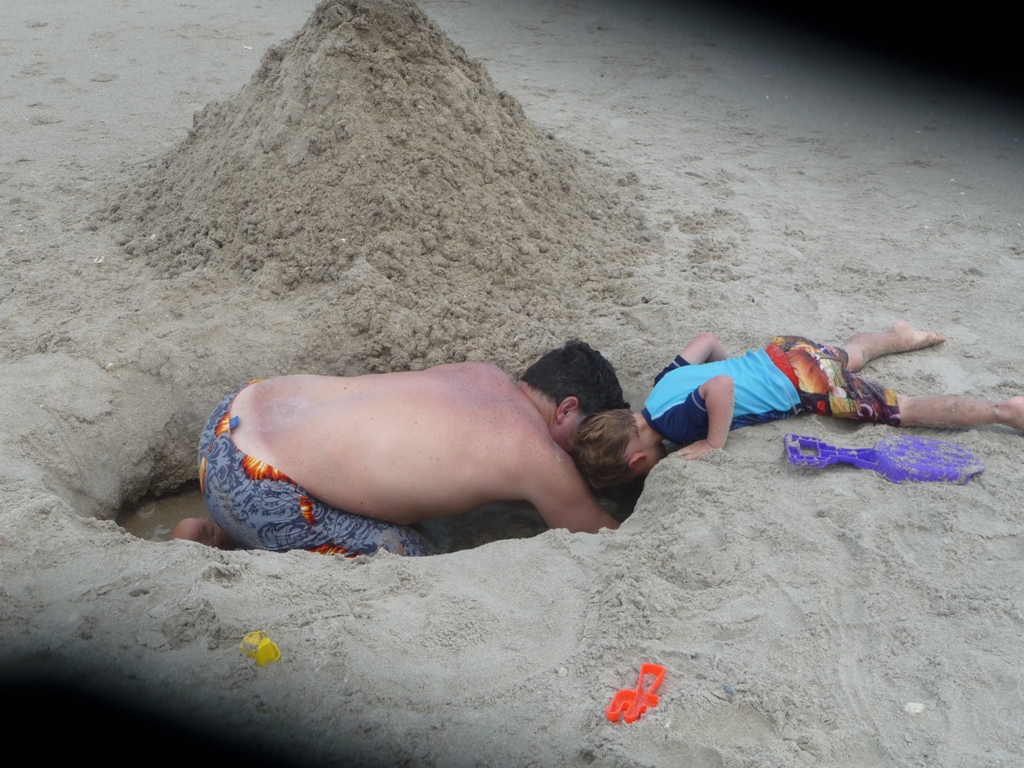
Dash helping out with the tunnel. |
 |

Sean at the Melbourne Zoo (they have a good kid's center). |
| Fun trip. Dash sees his first and perhaps last pay phone while waiting for our plane from Los Angeles to San Diego. |  |
Wednesday, August 5, 2009
Dash knows there are certain things he is not allowed to say. One of which anything along the lines of "I'll shoot you." But he's sneaky. He was heading done that road "...and I'm going to shoot you..." I gave him a look, he smoothly segued into ".. with my love gun."
Monday, July 27, 2009
Dash to Leigh: "Mommy, you're complicated."
Conversation this morning about Dash's new Terminator action figure:
"Look, Daddy, this pack goes on his back." (Some soldier-ish power pack).
"Yeah, Dash, it's a backpack."
"It's not a backpack: it doesn't have sunscreen in it."
Monday, July 20, 2009
| An oldie, but a goodie. Recovered from Feb 2007.
This was a big thing for about six months. He's 16 months old here. Normally he dances a whole lot more, but since the camera was on, that's where his attention was. He involuntarily got moving during the second round, before he regained his dignity. Me, apparently my need to share outweighs my need for self-respect. This is fodder for abuse, I know. |
Tuesday, July 14, 2009
Delightedness. or simply, Delight.
The baby's purity of emotion - pure joy, in particular - gives way in a toddler to something less intense, more moderated, more complex, more diluted by the complexity of his awareness. It makes those moments of radiant delight all the more precious.
Had a couple of those moments this weekend.
I must say that it finally feels like summer here in chilly San Diego. The cold Pacific and warm desert land creates a "Marine Layer" of clouds that hugs the coast. You can count on the Marine Layer having an overwhelming affect on the weather in June and a lesser affect in May. They call it the June Gloom and May Gray. When July hit, it knocked the Marine Layer out of the picture. It's been beautiful.
| The weekend of the Fourth was a lot of Fun.
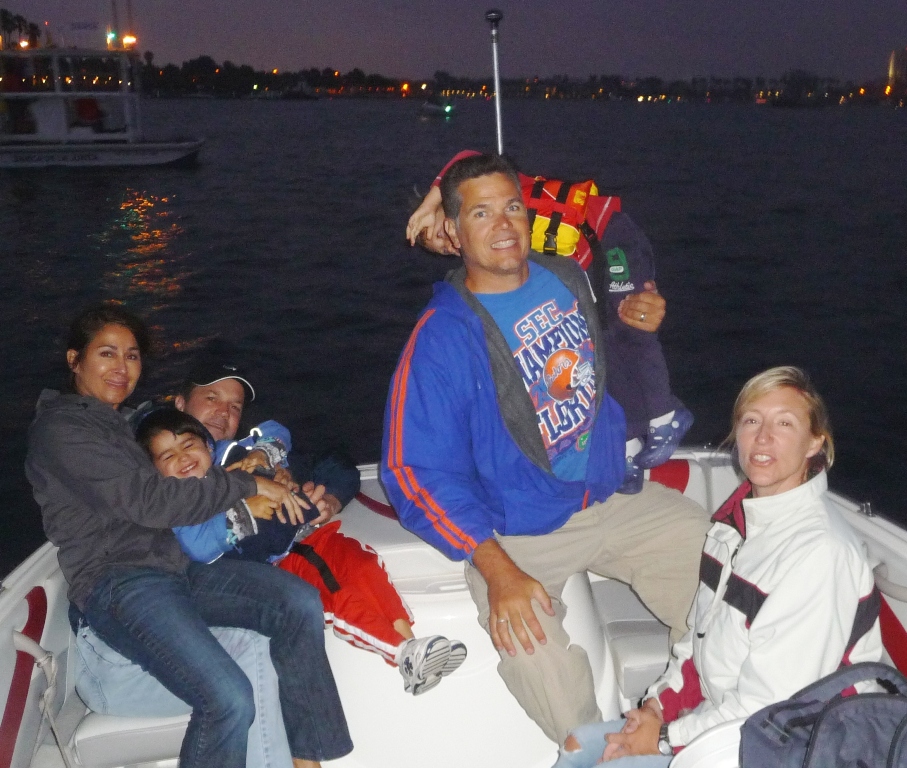
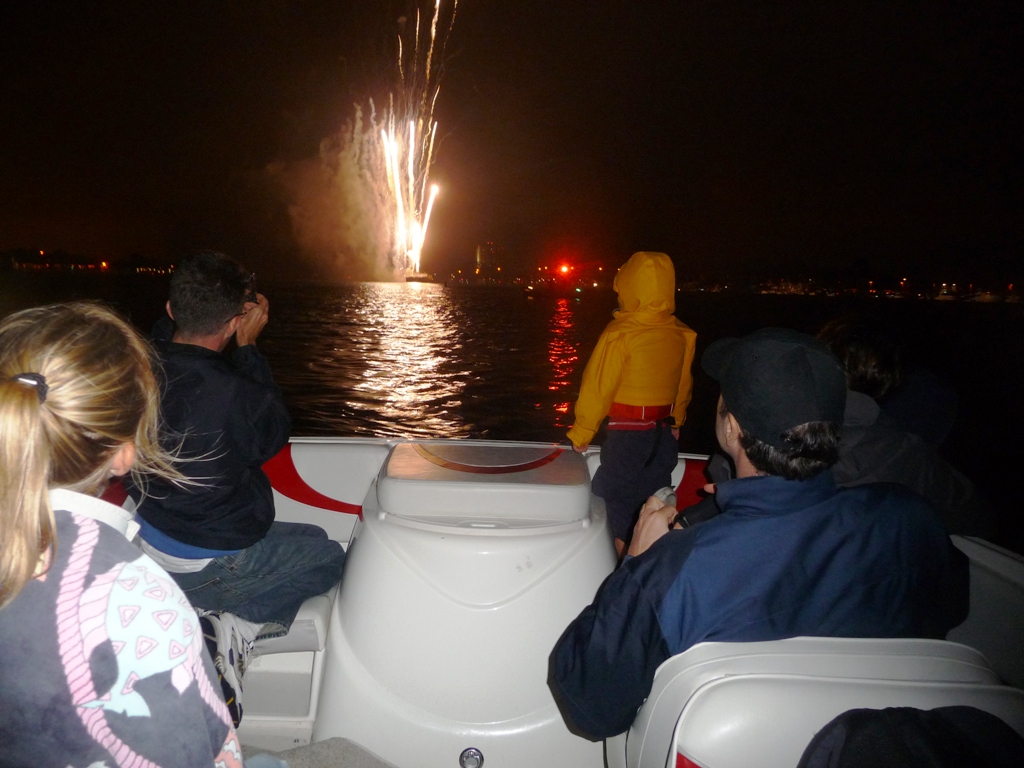
On Friday, we took the boat out with Tony and Alex, Bob and Marissa to watch the Princess Resort's annual 3rd of July fireworks show. It was our first time out at night with the boat. I was concerned that Dash and Alex wouldn't like the noise (Dash makes us close the windows when watching the Sea World fireworks), but they didn't even flinch. The fireworks were great and very close. The dieting has been seeping into my consciousness as some of the fireworks looked like angel hair (Dash thought "Angel Hair" a hilarious concept (who's to judge?)) and some sounded like bacon frying (which he comment on the following morning as "the bacon fireworks"). Everyone had a good time. |
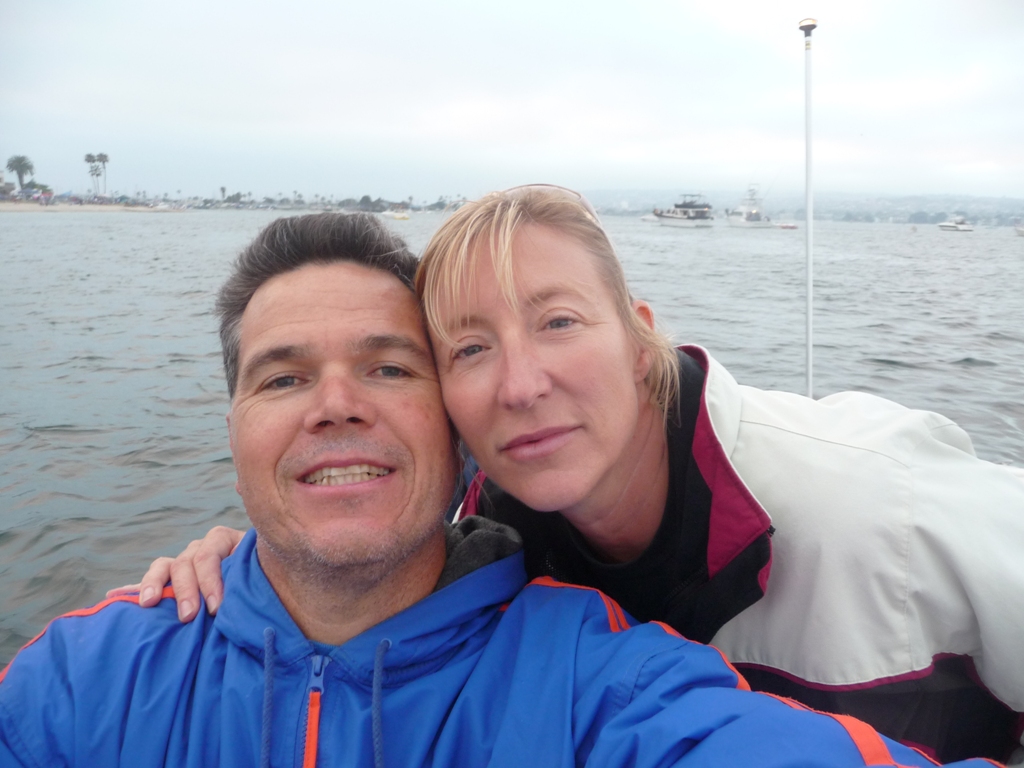 |
 |
 |
Saturday night we had a couple of Dash's ex-schoolmate's and families over to watch the fireworks (having attended five elementary schools I'm a bit sensitive to Dash losing friends, three of his closest daycare friends have moved on to other daycares).
Sunday we went to the beach on a beautiful day. We all did some surfing. None of us did it well, of course, but that's not the point. Dash is delighted by the water. Dash made me hold his boogie board in place and hold him up on it and let the waves hit it, like that's an easy thing to do or something.
This weekend we went to the beach on Saturday, which was another glorious day. More "surfing." This time Dash refused the board and did a version of body surfing which involves getting knocked down by the wave and getting swept up in the foam, thrashing with his arms to get his head up to get air until he can stand again. Remarkably similar to how I "surf".
Sunday we took the boat out with Leigh's boss, wife and 8-year old son, on a day that was so warm and windless that I did something that I hadn't done in the 14 years I've lived here: I went swimming in the bay! Jumping off the boat, while we were anchored outside the Sea World Cirque d' la Mer acrobat show that Dash likes so much. Dash jumped in to me, again delighted, his energy kick-started by the cold water (it's still a shock to the system). And climbing back out, crawling over the innertube to jump back in. Again! Again!
| Prior to Sea World we stopped at "Pirate Island" for the first time. I don't actually know its name, but with a 3-year old and an 8-year old on board, it's Pirate Island.
We picnicked for about an hour. Dash and Garrett spent a lot of time searching for pirate treasure and bones. They found a lot of bones (apparently Pirates discard a lot of chicken legs (but, again, there was no need to dissuade Dash that they weren't the bones of pirates). Note the handful of bones in the photo. We of course had to bring the bones with us. Fortunately he forgot about them by the time we got home, so they are NOT on display in the house in the requisite seashell collection. Again: delighted. |
 |